
 By Meerab Shaikh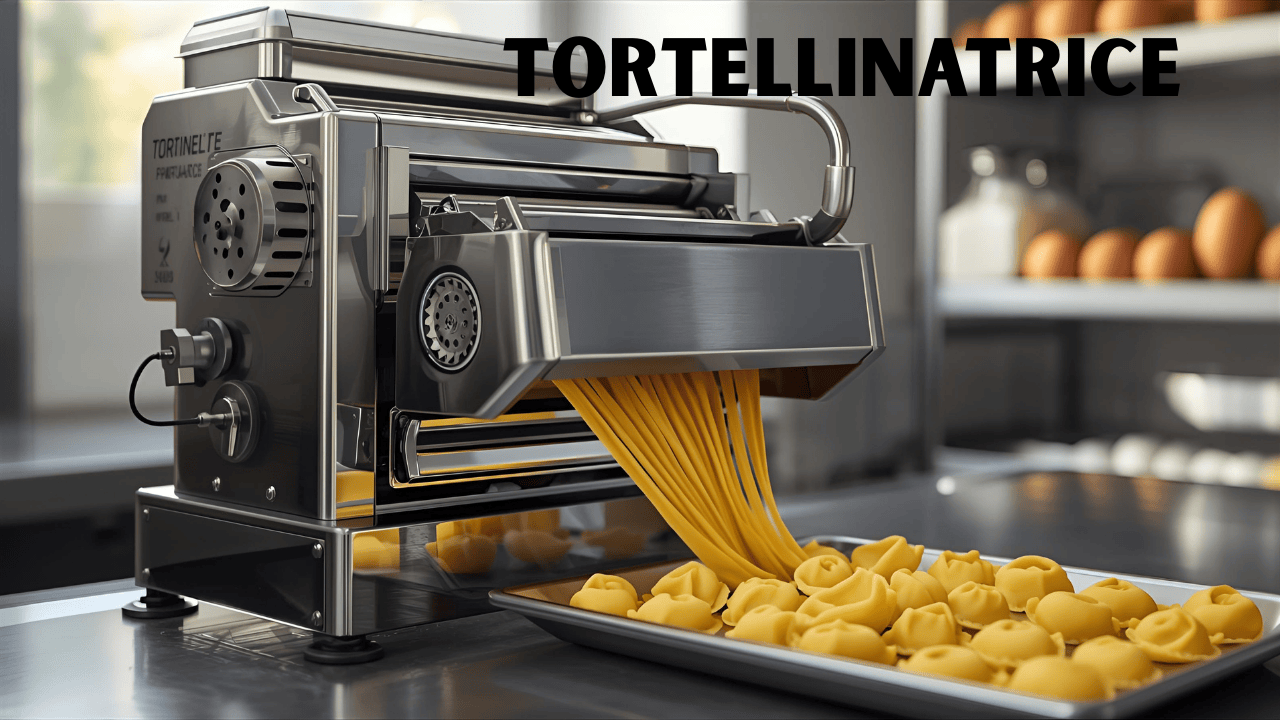
The word tortellinatrice comes from Italian, where it describes a machine designed to produce tortellini, the famous ring-shaped stuffed pasta originating from the Emilia-Romagna region. While tortellini has a deep tradition of being handmade, the demand for large quantities of consistent and high-quality pasta has led to the development of the tortellinatrice. This machine allows pasta makers, restaurants, and even large factories to produce tortellini at scale without compromising on the taste or structure of the pasta.
The tortellinatrice has become an essential tool for modern pasta production, balancing efficiency with tradition. It comes in various forms, from small bench-top machines to fully automated industrial systems. Understanding its design, process, advantages, and limitations gives valuable insight into how the pasta industry continues to evolve.
How the Tortellinatrice Works
A tortellinatrice is designed to replicate the traditional steps of making tortellini while streamlining them into a single automated or semi-automated process.
- Dough sheeting: The machine rolls out the dough into thin, even sheets. This step ensures the right thickness for wrapping fillings.
- Filling deposition: A measured quantity of filling, such as cheese, meat, or vegetables, is placed on the pasta sheet at precise intervals.
- Folding and sealing: The sheet is folded over, and the filling is sealed inside. Specialized molds shape the pasta into the iconic ring form.
- Cutting and separation: Excess dough is trimmed, and individual tortellini are cut apart.
- Collection: The finished tortellini are ready to be cooked, frozen, or packaged.
This structured process ensures uniformity, hygiene, and speed, which are especially important for commercial pasta production.
Types of Tortellinatrice
The tortellinatrice is available in different models depending on the scale and purpose of production.
- Bench or table models: Small-sized machines perfect for restaurants, catering businesses, or artisan pasta makers. They are easy to use and compact.
- Semi-automatic machines: These combine manual feeding with automatic folding and sealing. They provide a balance between tradition and automation.
- Fully automatic industrial models: Designed for large-scale factories, these machines can produce hundreds of kilograms per hour, often with integrated systems for recipe storage, touch screen controls, and automated sanitation.
The choice of tortellinatrice depends on factors such as production needs, available space, and budget.
Key Features and Technical Aspects
When evaluating a tortellinatrice, several technical and functional features play an important role:
- Stainless steel construction to meet food safety and hygiene standards.
- Adjustable settings for dough thickness, filling quantity, and shape size.
- Easy disassembly for cleaning and sanitization.
- Safety systems such as protective panels and low-voltage circuits.
- Output capacity, often measured in kilograms per hour or pieces per hour.
- Compatibility with different fillings and pasta shapes beyond tortellini, such as cappelletti or ravioli, in some models.
These features make the tortellinatrice adaptable and suitable for both small artisans and large food producers.
Advantages of Using a Tortellinatrice
The tortellinatrice offers several benefits that make it an indispensable machine in modern pasta production:
- Consistency: Each tortellini has the same size, shape, and amount of filling, ensuring uniform quality.
- Efficiency: It reduces manual labor, allowing higher output in less time.
- Hygiene: Modern designs are built to maintain cleanliness, minimizing contamination risks.
- Scalability: Production can easily be scaled up from small-batch to industrial levels.
- Cost-effectiveness: While the initial investment may be high, the savings in labor and increased productivity make it worthwhile in the long run.
For pasta shops, restaurants, or factories, the tortellinatrice is both a time-saving and quality-enhancing solution.
Limitations and Challenges
While the tortellinatrice has many advantages, it also comes with challenges:
- High initial investment, especially for industrial models.
- Space requirements for larger machines.
- Regular maintenance and servicing needed for smooth operation.
- Limited flexibility in some cases, as switching shapes or fillings might require additional molds or adjustments.
- Some purists argue that machine-made tortellini may lack the authenticity and subtle differences of handmade versions.
Despite these challenges, the tortellinatrice remains a practical and reliable solution for most modern pasta makers.
Popular Models of Tortellinatrice
Several manufacturers produce different models of the tortellinatrice, offering a variety of options for buyers:
- Facchini TA540-S: A stainless steel model with touch screen control and easy cleaning features.
- Lineapasta RC265: Known for producing tortellini, cappelletti, and ravioli with an output capacity ranging from 40 to 110 kilograms per hour.
- Ostoni T8: An industrial-level model with multiple punches, high production speed, and advanced controls.
Each of these machines caters to different scales of production, showing the versatility of the tortellinatrice across the pasta industry.
Cultural and Historical Context
Tortellini has a long history in Italian cuisine, especially in Emilia-Romagna, where it is considered a cultural icon. Traditionally, families and artisans made tortellini by hand, a process that required skill and patience. However, with growing demand both in Italy and worldwide, the tortellinatrice became necessary to maintain supply while keeping the authentic taste and shape intact.
This machine does not replace tradition but rather complements it, allowing pasta makers to honor heritage while meeting modern production requirements.
Points to Consider Before Buying a Tortellinatrice
When investing in a tortellinatrice, it is important to think about:
- Your production scale: Are you a small pasta shop, a restaurant, or an industrial producer?
- Available space: Smaller machines are compact, while larger ones need significant floor area.
- Budget: Prices vary widely, so aligning features with affordability is key.
- Flexibility: Some machines are specialized, while others can produce multiple pasta shapes.
- Maintenance: Choose a machine that is easy to clean and maintain for long-term efficiency.
Conclusion
The tortellinatrice is more than just a pasta machine; it is a bridge between tradition and innovation. By automating the delicate process of making tortellini, it provides consistency, hygiene, and scalability while preserving the cultural essence of Italian cuisine. Whether used in small artisan shops or large industrial facilities, the tortellinatrice continues to play an essential role in bringing authentic pasta to tables worldwide.
This machine has proven to be an invaluable tool for pasta makers, balancing efficiency with respect for culinary heritage. With the right model, any business or artisan can benefit from the precision and reliability of the tortellinatrice.
Frequently Asked Questions (FAQs)
Q1. What is a tortellinatrice?
A tortellinatrice is a machine designed to produce tortellini, the famous Italian stuffed pasta. It automates the process of rolling dough, adding filling, sealing, and shaping the pasta.
Q2. Who uses a tortellinatrice?
It is used by pasta shops, restaurants, catering businesses, and large pasta factories that need consistent and efficient production of tortellini.
Q3. Are there different types of tortellinatrice?
Yes, there are bench models for small-scale use, semi-automatic machines that combine manual and automated steps, and fully automatic industrial models for high-volume production.
Q4. Can a tortellinatrice make other pasta shapes?
Some models can also produce cappelletti, ravioli, and other filled pasta, depending on the attachments and molds available.
Q5. What are the main benefits of using a tortellinatrice?
The main benefits include consistency in pasta quality, faster production speed, improved hygiene, and scalability for different production needs.
 Sky link building
  admin
admin